Manual Therapy and Neuro-Ed for Geriatrics in Tennessee
A seminar for licensed clinicians, not a patient service. Techniques and Interventions for the Aging Population, taught by Dr. Michael Chua, PT, DPT, CDP, CADDCT, SFS, CCI.
What is this seminar?
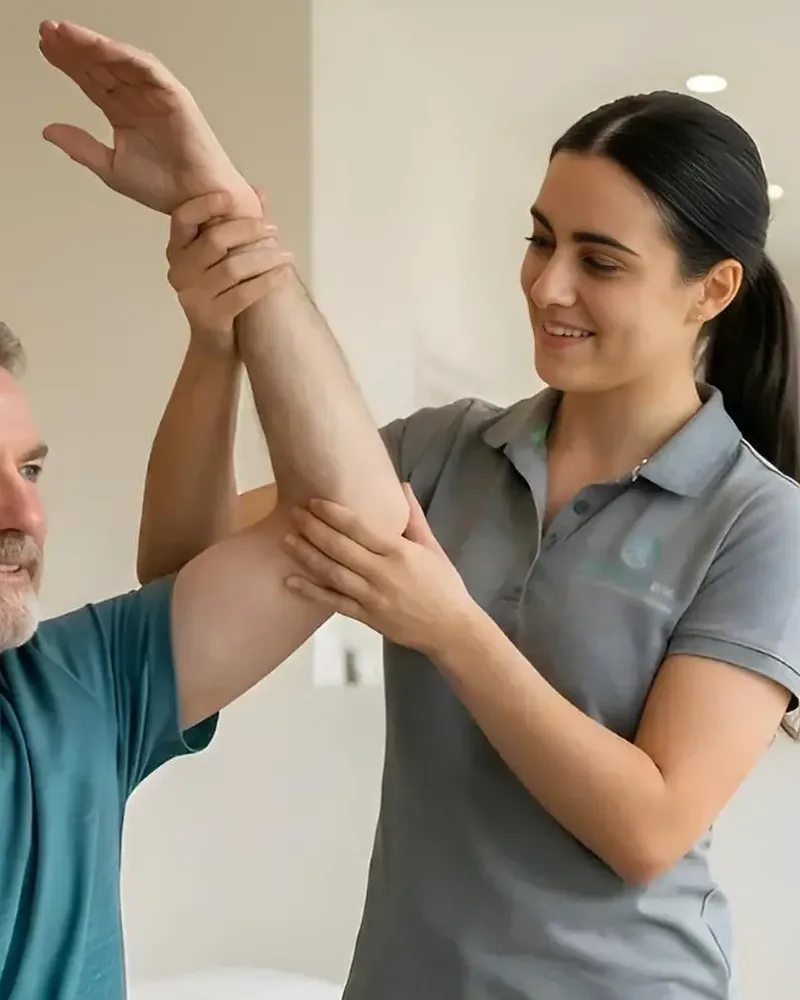
A note for patients first: this page describes a course for therapists, not a treatment you can book. If you are looking for hands-on care, go to manual therapy or physical therapy instead. The rest of this page is for clinicians. Most manual therapy training is taught on a young, dense, uncomplicated body, and then you get to work and the person on your table is 78, three years past a hip replacement, on a blood thinner, and braced against you before you have touched anything. The technique is not wrong. The application is.
Techniques and Interventions for the Aging Population is built for that gap. The seminar defines manual therapy and neuro-ed and where they actually apply in geriatric practice, explains the physiological and the psychological benefits of hands-on work with older adults, walks through specific interventions region by region, and then puts you into lab time so the techniques leave the room in your hands rather than in your notes. It is taught by Dr. Michael Chua, PT, DPT, CDP, CADDCT, SFS, CCI.
Who should be in the room.
This is a working seminar for licensed clinicians, with lab time. It assumes you already have hands and a caseload, and it fills in the part that geriatric practice keeps asking of you.
Therapists trained on younger bodies
Your coursework used healthy models and firm end feels. Older joints, thinner tissue, surgical hardware and medication histories change the dosage and sometimes the technique. This is where you recalibrate rather than guess your way through it.
Clinicians moving into geriatrics
Maybe the caseload shifted, or maybe you chose it. Either way the aging population is its own specialty, and knowing where manual therapy helps and where neuro-ed does the heavier lifting is the difference between a good session and a wasted one.
Clinical instructors and mentors
You are the person a student copies. Lab time gives you techniques you can demonstrate cleanly and reasoning you can explain out loud, so what you pass down is a method rather than a habit you picked up somewhere.
How the seminar runs.
Definitions first, then interventions by region, then hands on a real person. The four course objectives map straight onto those three blocks.
Define it and justify it
What manual therapy and neuro-ed mean in a geriatric caseload, where each one belongs, and the physiological and psychological benefits behind them. Older adults respond to skilled touch in ways that show up in tone, guarding and willingness to move, not only in range of motion.
Work through the regions
Specific interventions joint by joint and region by region, with the reasoning that decides which one you reach for. The emphasis is on selection and dosage for aging tissue rather than on collecting more techniques you will never use.
Get your hands on it
Lab activities to practice the techniques with feedback in the room. Reading a mobilization and performing one are different skills, and the lab exists so you leave able to do the thing rather than able to describe it.
Dates, format and registration are handled by phone. Send the form on this page or call the Jackson office at (731) 462-4315, and we will tell you when the next seminar runs and what to bring.
GeriHab Physical Therapy is an outstanding clinic with an exceptional team.
Here for treatment, not training?
Manual Therapy
Skilled hands-on work to free up a joint that has quietly stopped moving through its full range.

Geriatric Physical Therapy
Therapy for bodies over 65, aimed at keeping the stairs, the car and the grocery run yours.
Back Pain & Sciatica
Leg pain that begins in the back rarely settles on its own. We treat the segment causing it.