Shoulder Pain Treatment in Tennessee
Reaching into the top cupboard. Fastening a seatbelt. Sleeping on that side. You have started planning your day around the shoulder instead of using it, and somebody has told you it is just wear and tear. Wear is common. Living around the pain is not the only option.
What causes shoulder pain?
The shoulder is one of the most mobile joints in the body, and that mobility is exactly what makes it vulnerable. It depends on muscles, joints and soft tissue working together, so when one piece stops doing its job the whole thing gets irritated. Plenty of shoulder pain arrives without any injury at all: it builds out of how you move and what you do every day. It also tends to get worse rather than better when it is left alone, because the shoulder you stop using is the shoulder that stiffens.

The rotator cuff is a group of small muscles whose whole job is holding the ball of the shoulder centred while the big muscles do the lifting. They get irritated by repetition, weakened by disuse, or strained outright by a fall or a sudden pull. The signature is pain with overhead reaching and pain lying on that side at night. Weakness here is one of the most treatable causes of shoulder pain, because the muscles respond to loading even when the joint underneath shows age related change.
Bursitis is inflammation of the small fluid filled sacs that let tendons glide over bone. When one becomes inflamed, the shoulder hurts through a specific arc of movement and aches afterward. It usually follows a period of overuse or a change in how you have been using the arm. Calming the inflammation matters, but it is only the first step. Unless the movement pattern that irritated the bursa changes, it comes straight back.
When the rotator cuff tires or the shoulder blade stops moving properly, the top of the arm bone drifts upward and the tendons underneath get pinched. That is why the pain shows up as a sharp catch partway through reaching for a shelf and then eases once the arm is all the way up. The fix is not rest. It is restoring how the shoulder blade moves and strengthening the muscles that keep the joint centred.
Some shoulders tighten slowly over months, often after an injury or a stretch of holding the arm still. The connective tissue around the joint thickens and shortens, so range disappears in every direction, not just overhead. Reaching behind your back to fasten a bra or pull out a wallet becomes the hardest movement. Progress here is slow and steady rather than dramatic. Consistent hands on mobilization and daily range of motion work are what open it back up.
Shoulders accumulate wear like every other joint, and imaging past a certain age almost always finds something to name. A finding on a scan is not a sentence. What determines how a shoulder feels day to day is how much motion it has kept and how strong the muscles around it are, and both of those are things we can change. The goal is a shoulder that does what you need it to do, not a shoulder that photographs well.
Hours in a chair with the shoulders rounded forward, or a job and a set of hobbies that put the arm overhead again and again, load the cuff without giving it time to recover. The muscles fatigue, tighten and eventually strain. None of this is dramatic and none of it feels like an injury, which is exactly why it goes unaddressed until the shoulder starts hurting at night. Change the posture and the load, and the tissue gets a chance to settle.
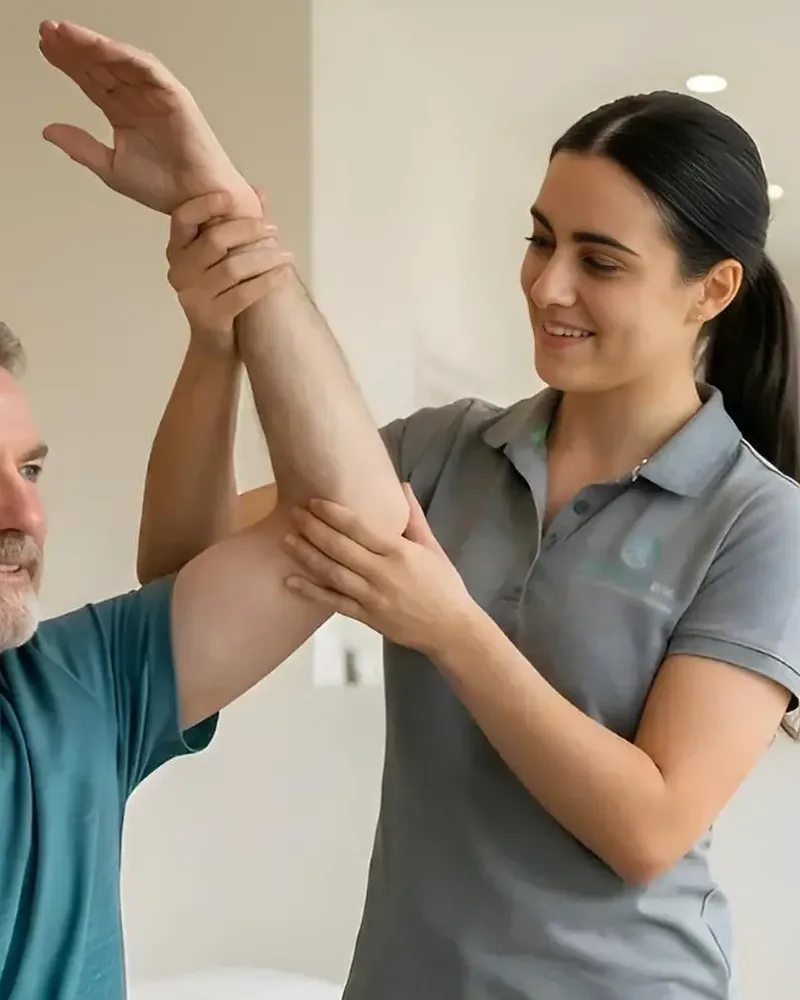
How physical therapy in Tennessee helps.
Most shoulders get handed a sling and told to rest. Rest quiets an angry shoulder for a week and stiffens it for a year. Treatment here runs in three parts. Hands on therapy improves joint movement, reduces stiffness and eases the muscle tension around it. Strength and stability training rebuilds the control the shoulder lost, which takes stress off the structures that have been overworking. Postural and movement retraining changes how you reach, lift and carry during an ordinary day so the same strain does not build back up. Each session is adjusted to where you are, and sessions run 30 to 60 minutes, one on one.
What to expect from your recovery.
Assessment
Range of motion testing to find the restrictions, strength testing to find the imbalances, joint mobility work to locate the stiffness, a screen for nerve related symptoms running into the arm, and a look at your posture. You leave knowing which of those is driving your pain. No referral is required to start in Tennessee.
Hands on therapy
Manual work to improve joint movement, reduce stiffness and release the muscle tension that has built up around the shoulder and shoulder blade. Reaching and sleeping usually get easier during this phase. Two to three visits a week is typical, and most plans cover some or all of the cost. We verify your benefits first.
Strength and retraining
Exercises that support the shoulder, improve control and take stress off the structures that have been overloaded, plus guidance on how you move during daily activities. Most people notice a change within the first few weeks, and a typical plan runs four to six weeks. Your therapist sets a realistic timeline at the evaluation.
I would like to thank my physical therapist and their staff for the expertise that they have shown me in healing me of my pain in my shoulders. It was so excruciating.
Pain rarely travels alone.

Elbow, Wrist & Hand Pain
Guarding a sore shoulder shifts work down the arm. Treating the whole chain is what restores the reach.

Joint Pain
Aching in more than one joint usually points at something bigger than the shoulder. We assess the whole picture.

Neck Pain
Neck and shoulder problems are often connected. We treat both areas so the movement actually improves.