Balance Therapy in Tennessee
Feeling unsteady is not just a normal part of aging, and you are not imagining it. Balance is a skill your body runs from strength, vision, the inner ear and reflexes. Each of those can be tested, and each of them can be trained.
What is balance therapy?
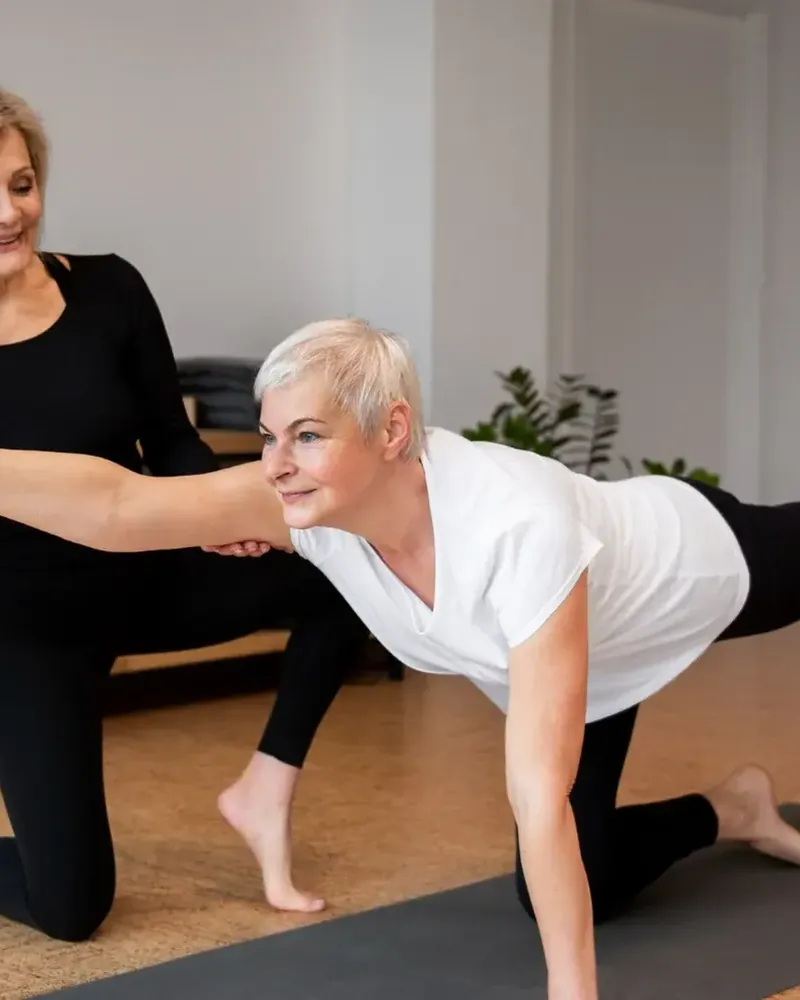
Balance therapy is training for the systems that keep you upright. Standing still is not passive. Your legs and hips are making constant small corrections based on what your eyes see, what your inner ear senses, and what the nerves in your feet and joints report back. When one of those inputs weakens or slows, the others have to cover for it, and the margin for error gets thin. That is when a turn in the kitchen or a step off a curb becomes a stumble. Your therapist works out which part is falling behind: muscle weakness and reduced mobility, poor coordination and delayed reflexes, changes in posture and movement patterns, or inner ear and visual system challenges.
Then that part gets trained directly. Strength and flexibility work for the hips, legs and ankles. Balance and coordination exercises to sharpen reaction time. Gait training for walking mechanics, and functional movement practice on the tasks that actually catch people out. Balance and walking are closely linked, so when one is off the other usually follows, and both get addressed. The plan runs through our four phases, pain, prime, perform and prevent, so steadiness holds instead of fading after discharge. Every exercise is set to your ability and supervised. In Tennessee you can start balance therapy without a physician's prescription for up to 90 days, and most plans cover some or all of the cost, which we verify before you begin. Many patients report feeling stronger and steadier within a few weeks of consistent care.
Who balance therapy in Tennessee helps.
If you have started holding the wall, or planning a route through your own house by what you can hold onto, that is worth an evaluation. These are the situations balance therapy is built for.
Unsteady, with no clear diagnosis
Nothing was ever named. You just feel less sure of yourself, especially turning, in low light, or on uneven ground. We test each part of the balance system and train the weak link until reaching up into a cabinet stops being a decision you have to think through.
Dizziness that changed how you move
Spells of dizziness or spinning have you walking slowly and holding on to things. We work the vestibular side alongside strength and gait training, so you can turn your head, look up, and walk at a normal pace again.
Balance loss from a neurological condition
Parkinson's, stroke and MS each affect balance in their own way, and recovery after surgery or a long illness does too. Training is matched to the condition so the gains show up in your hallway and your driveway, not only in the clinic.
What to expect in a session.
You will not be handed a sheet of exercises and left to it. Every session is one on one, guided, and adjusted as you go.
Evaluation of balance and gait
The first visit is a one on one evaluation of your balance, your walking and your overall mobility. Your therapist watches you walk, turn, stand up and reach, tests strength and coordination, and asks exactly where and when you feel least secure. That map decides what gets trained first.
Guided, supervised training
Sessions run 30 to 60 minutes. Strength and flexibility work for the hips, legs and ankles, balance and coordination exercises, gait training, and functional practice on real tasks. Every exercise is set at your level and supervised, and the difficulty only goes up once you have earned it.
Progress and prevention
Two to three visits a week for four to six weeks is a typical course, and many people feel steadier inside the first few weeks. As you improve, the work shifts toward fall prevention strategies and a home program that holds the gains after you are discharged.
Yes, and that is the whole design. Every exercise is tailored to your ability level and performed in a controlled, supervised environment with your therapist within arm's reach. The work should feel challenging, never reckless. Wear flat, closed shoes you can walk in and tell us if anything makes you feel unsafe.
I am stronger and much more balanced! The people there are kind and very supportive of my needs.
Where to go next.
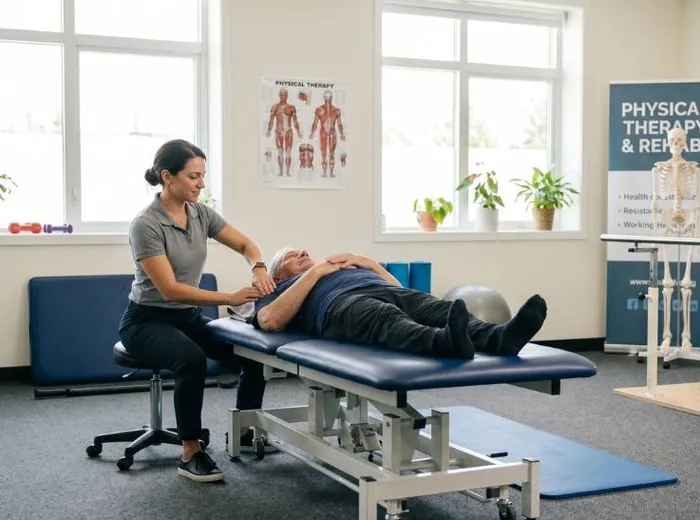
Vestibular Therapy
Inner ear and brain retraining for vertigo, dizziness and the unsteadiness that arrives with them.

Fall Prevention
Home hazards, medication effects and strength addressed together, so the plan covers more than exercise.
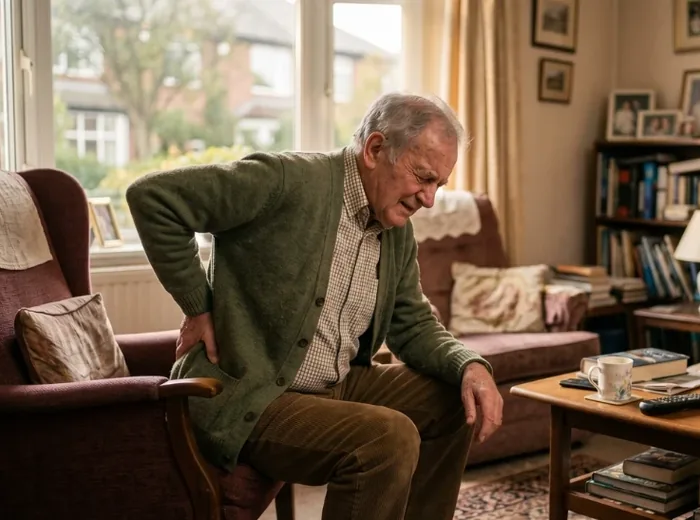
Balance & Gait Disorders
Why walking and balance break down as we age, and which of those causes therapy can actually change.