Hip & Knee Pain Treatment in Tennessee
Stairs one at a time. A pause before you stand up. A hip that wakes you at two in the morning because there is no comfortable way to lie. You have probably been told it is wear and tear and to take it easy, which quietly costs you the strength you still have. One evaluation tells you which part of the load your joints have stopped sharing.
What causes hip and knee pain?
Your hips and knees carry you all day. They take load with every step, every stair and every time you push up out of a chair. When strength, mobility or alignment changes, that load stops being shared evenly, and whichever joint absorbs the extra becomes irritated and painful. Hips and knees also work as a pair, so the joint that hurts is often not the one that started the problem.
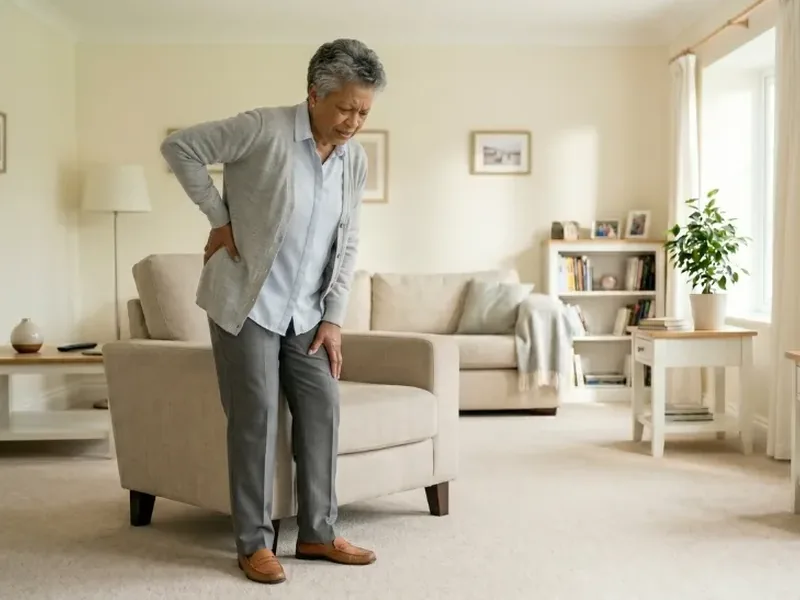
Muscle weakness or tightness changes how your joints travel through a step. Even a small imbalance shifts where the pressure lands, and the joint takes that same off-center load thousands of times a day. This is why hip and knee pain so often arrives without any injury to blame it on. It also means the fix has to be specific. We find which muscles have stopped doing their share and retrain those, rather than handing you a general sheet of exercises and hoping.
Daily activity and repeated movement gradually wear on tissue when there is not enough recovery or support between efforts. A day of yard work, a move, a stretch of extra walking, or simply doing the same task the same way for thirty years all add up. The tissue is not so much damaged as overloaded, and it settles once the total load comes down and the muscles around the joint start carrying more of it again.
Over time the cushioning inside the joint thins, which brings stiffness, less motion and discomfort with movement. Mornings are worse. Getting going after you have been sitting is worse. Hips often ache at night because there is no comfortable position to lie in. But an image showing wear does not decide how much pain you live with. Strength around the joint and the motion you keep matter more, and both can be improved at any age.
Hips and knees work closely together. When one is weak or restricted, the other takes over its share, and that added stress shows up as pain in the joint that was fine to begin with. The same thing happens between your two legs after a fall or a surgery, when you spend months favoring one side without really deciding to. Treating only the painful joint leaves the reason for the extra load exactly where it was.
Hip pain that runs down the leg usually means something other than the joint surface. Tight muscles around the hip and pelvis, or irritation of a nerve passing through them, can send symptoms into the thigh, down the outside of the leg, or past the knee. Because it feels like the leg is the problem, people often treat the wrong area for months. Sorting joint pain from nerve pain at the evaluation decides the whole plan.

How physical therapy in Tennessee helps.
Care starts with a detailed, one-on-one assessment: how you walk, how you rise from a chair, how each hip and knee moves, and where the strength has gone missing. Hands-on techniques then improve joint mobility and take the edge off the stiffness. Strengthening and movement training rebuild the muscle support and the walking mechanics that keep pressure off the joint. Balance work belongs in the plan too, because painful joints change how you move and raise the risk of a fall. Most clinics send you home with a heating pad and a photocopy. We watch you get out of the chair, then fix the reason it is hard. Tennessee direct access means you can start without a prescription, up to 90 days, and we verify your benefits before your first visit.
What to expect from your recovery.
Assessment
Your first visit runs 30 to 60 minutes, one on one. We watch you walk, climb a step and stand up from a chair, test hip and knee strength and motion on both sides, and talk through what the joint has to do at home. You leave knowing what is driving the pain, not just where it hurts.
Hands-on work and mobility
Early sessions use manual therapy to free up the joint and quiet the stiffness, paired with movement you can tolerate right now. Most people come two to three times a week. The first sign of progress is usually easier stairs or a better night of sleep within the first few weeks.
Strength, balance and protection
As comfort improves we load the joint deliberately, building the hip and thigh strength that stairs, groceries and getting up off the floor demand, plus balance work for curbs and uneven ground. A typical plan runs four to six weeks, and you leave with a home program and habits that protect the joint.
I have been going there for a couple of months getting better all the time. The people are so great, way to go guys keep it up.
Pain rarely travels alone.
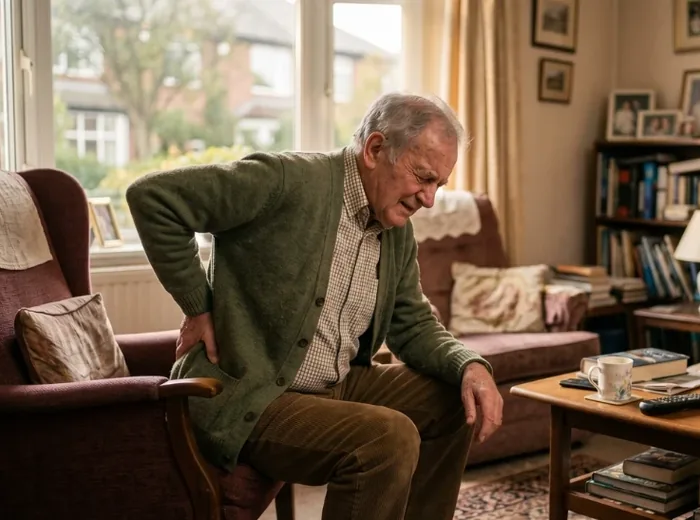
Back Pain & Sciatica
Hips and the lower back share the work. Weak or stiff hips often turn up as back pain and sciatica.

Balance & Gait Disorders
Painful joints change the way you walk, and an altered walking pattern raises your risk of a fall. We retrain both.
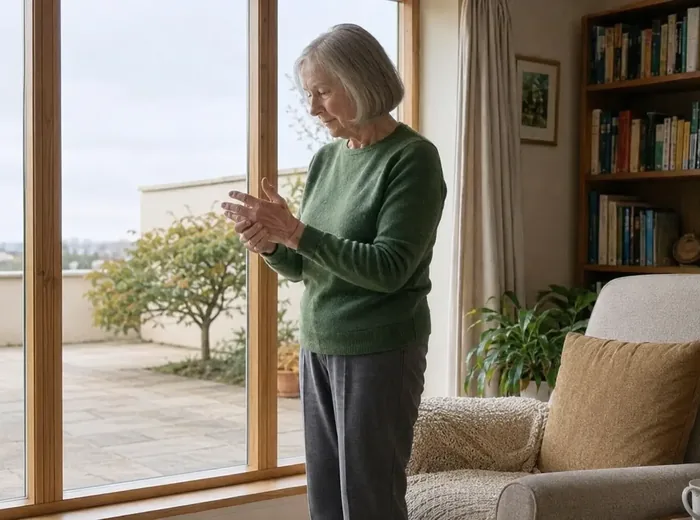
Arthritis
Joint changes in the hip and knee stay manageable when the muscles around them are strong and the motion is kept.