Stroke Rehabilitation in Tennessee
The stroke happened once. What nobody prepares you for is the months afterward: an arm that will not do what you ask it to, a leg that gets heavy by mid afternoon, and the walk to the bathroom that everyone in the house is quietly worried about. Recovery does not stop at discharge.
What causes movement problems after a stroke?
A stroke interrupts blood flow to part of the brain. The movement problems that follow are not damage to the arm or the leg. They are a breakdown in the conversation between the brain and the muscles, and that distinction matters, because a conversation can be retrained. Every stroke affects a person differently, which is why a program built around someone else's recovery rarely fits yours. These are the changes we see most often, and each one is handled by a different part of the plan.
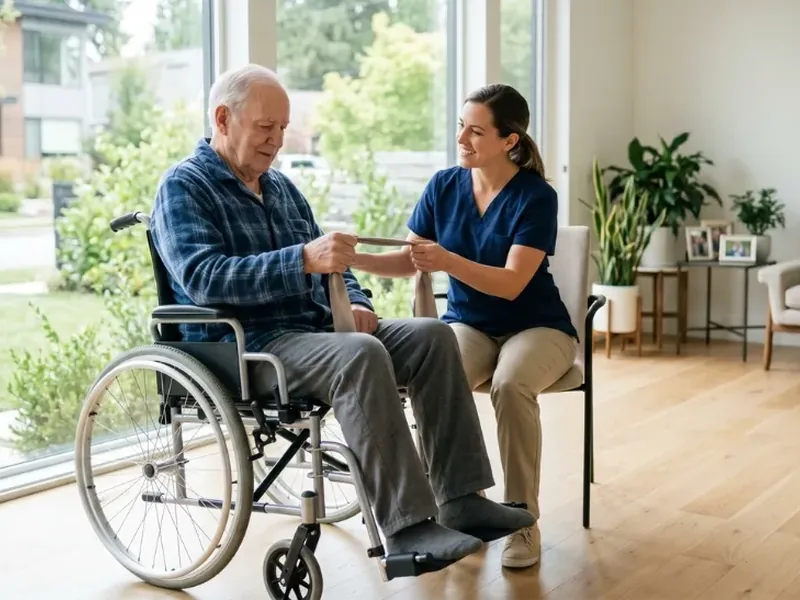
After a stroke the muscle itself is usually intact. What changed is the signal reaching it. The brain struggles to recruit the muscle at the right moment and in the right amount, so an arm that lifts on a good day will not budge on a bad one. Strength training rebuilds the connection as much as the muscle, and neuromuscular re-education teaches the timing back. This is slow, specific work, and it is the difference between a limb you protect and a limb you use.
Weakness is only half of it. Movement after a stroke often arrives in the wrong order, or with too much of one muscle and not enough of another, so reaching for a cup overshoots and standing up pulls to one side. Task specific training addresses that directly. We practise the actual movement you need, broken into parts, repeated until the sequence holds. Rehearsing the real task beats rehearsing an exercise that only resembles it.
Balance depends on your inner ear, your vision, the sensation coming up from your feet, and how fast you can react when something shifts underneath you. A stroke can affect all four. The result is a person who is steady standing still and unsteady turning around in a kitchen. Balance training rebuilds those reactions in graded steps, starting where you are solid and working outward. Reducing fall risk is often the single biggest factor in staying in your own home.
Spasticity is the involuntary tightening that pulls an elbow in toward the body or a foot into a downward point. Left alone, tight muscles shorten, and a shortened muscle is harder to move even on the days the signal is good. Sustained positioning, hands on techniques and consistent range of motion work keep the tissue long enough to be usable. This is maintenance that pays off over months, not something to do for a week and drop.
Many people lose some of the feedback coming from one side after a stroke: numbness, a limb that feels like it belongs to somebody else, or simply not knowing where the foot is without looking down at it. Movement is very hard to control when you cannot feel what it is doing. Sensory retraining rebuilds that body awareness so you are not relying entirely on your eyes to know where your limbs are, which makes dressing, transfers and walking all safer.
The problems that actually matter are specific ones: getting off a low toilet, stepping over the lip of a shower, walking from the car to the front door, moving from bed to chair at two in the morning. Each is a skill with its own requirements. We assess the ones you need, train them as real movements rather than exercises, and rehearse them until they are dependable. Function in your own routine is the point, not performance in the clinic.
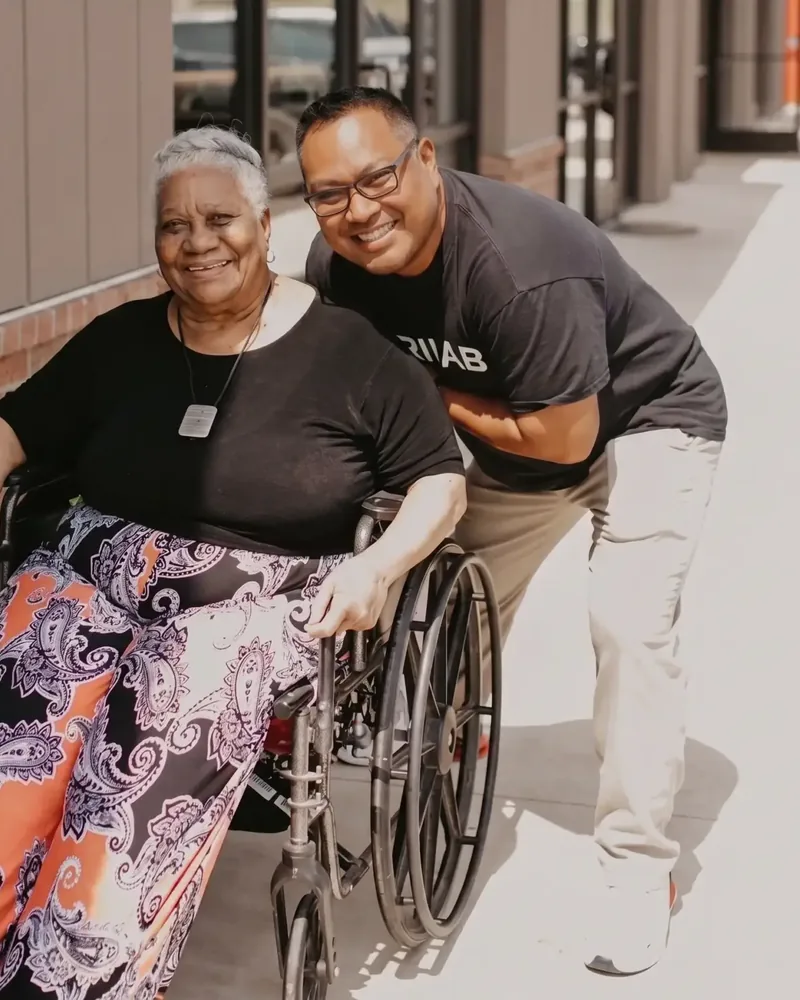
How physical therapy in Tennessee helps.
Rehab does not have to end when inpatient therapy ends. Your plan here runs in four phases: Pain, Prime, Perform, Prevent. We calm down whatever hurts enough for you to be assessed honestly, restore the range of motion and muscle activation the stroke shut off, then load it, because stairs, groceries and getting up off the floor all need real strength. The last phase keeps it: a home program, ongoing balance work, and a maintenance plan so the ground you gained does not slide back. In Paris, Terri Donahue is a licensed physical therapist certified in LSVT BIG, a large amplitude movement protocol developed for Parkinson's and also used for stroke and other neurological conditions. Sessions run 30 to 60 minutes, one on one.
What to expect from your recovery.
Evaluation
We watch you move: standing up, walking, turning, reaching, managing a step. We test strength, tone, sensation and balance on both sides, and we ask what you most want back. You leave with a plan tied to specific goals instead of a vague instruction to stay active. Tennessee direct access means no physician's prescription is required to begin.
Restore and retrain
Neuromuscular re-education, range of motion and hands on work to manage tightness, then task specific practice of the movements you actually need at home. Two to three visits a week for four to six weeks is a typical starting block. Most plans cover some or all of the cost, and we verify your benefits before you start.
Load it, then keep it
Strength and balance training progressed as you improve, plus a home program you can hold onto. Recovery after a stroke continues well past the early months, so maintenance is built into the plan rather than left to chance. Your therapist will tell you at the evaluation what a realistic timeline looks like for your situation.
I am stronger and much more balanced! The people there are kind and very supportive of my needs.
Recovery is rarely one thing.
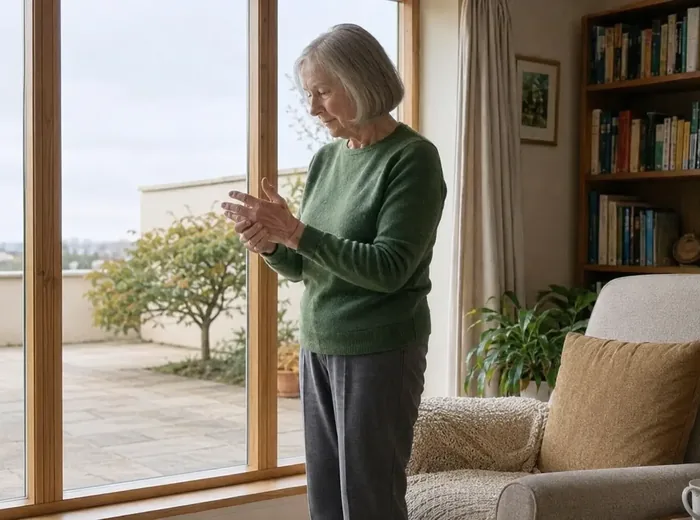
Nerve Pain
Numbness and altered sensation change how safely you move. Retraining what you feel is part of the work.
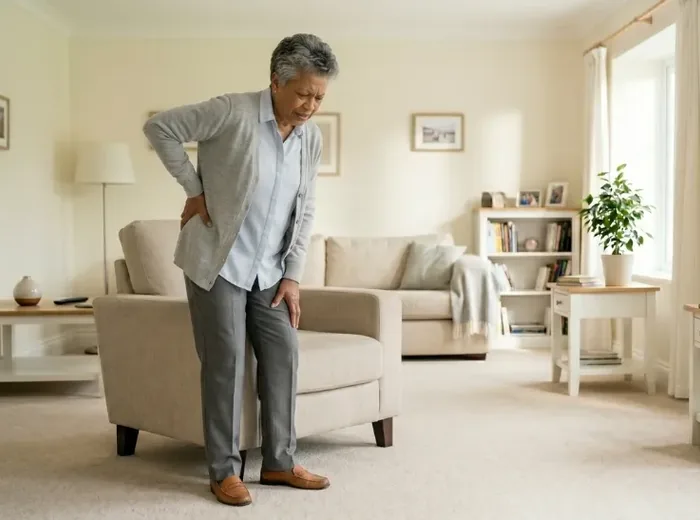
Balance & Gait Disorders
Walking pattern and reaction speed both change after a neurological event. Both are trainable, in graded steps.
Core Weakness
Trunk control is what lets you sit, stand and turn without pitching sideways. It is often the first thing we rebuild.