Personal Training in Tennessee
Discharge day is a strange sort of victory. You are better, nobody is watching anymore, and the strength you spent six weeks building is the easiest thing in the world to quietly lose. This is where that work keeps going.

What is personal training?
Personal training at GeriHab is supervised strength and fitness work for older adults, and it is what happens after formal therapy ends. Be clear about the category: this is a wellness service, not skilled physical therapy. There is no diagnosis and no plan of care. What there is, is a program written for your body and somebody in the room every time you work. Every program opens with a one on one assessment that looks at strength, mobility and flexibility, balance and fall risk, your medical history and current conditions, your daily activity level and where it stops, and how confident you honestly feel moving. From there the training is built on five pieces: strength work so the muscles that carry you through a day have something left to give, balance and stability training to keep fall risk down, functional movement so the tasks you repeat every day cost you less, mobility and flexibility work for joint health, and guided progression, which simply means someone changes the program as you improve instead of leaving you on the same weight all year. Group fitness is available as well, for people who show up more reliably with company than alone.
A commercial gym sells you a key card and wishes you luck. This is the opposite arrangement. Sessions are supervised start to finish, adjusted to how you feel that particular morning, and judged on form and safety rather than the number on the bar. If something hurts we stop, and if it keeps hurting we route you back through a physical therapy evaluation, because pain is a therapy question rather than a training question. Tennessee direct access means that evaluation does not need a physician's prescription for up to 90 days. You also do not have to have been a patient here to train here, though many people arrive that way.
Who trains with us in Tennessee.
Nobody here is training for a race. They are training so the stairs stay usable, so the grandkids still get picked up, and so nobody has to start a conversation about moving in with a daughter.
You just finished therapy
Discharge is where most gains quietly go. Two weeks out the home program slips, and by month three the stairs feel the way they did in the first week. Training picks up at the same weight and the same standard your therapist left you at, so the four to six weeks you invested still counts next spring.
You want to start and it makes you nervous
It has been years, and the last thing you want is to hurt yourself proving something. Your first sessions are deliberately unimpressive: sitting to standing, step ups, carrying a load across the room with good form. Confidence turns out to be trainable, and it is usually the first thing that comes back.
Balance is what worries you
You have not fallen yet, or you fell once and did not mention it to anyone. Hip and ankle strength plus balance and stability training is the pairing that keeps a stumble from turning into a landing. The measure that counts is whether you still walk to the mailbox without planning it first.
What to expect in a session.
Wear shoes you can stand up in and clothes you can move in. Nothing gets sprung on you, and nothing gets added to the program without a reason you can hear out loud.
The assessment
One on one, before any training starts. Strength, mobility and flexibility, balance and fall risk, your medical history and the conditions you are managing, what your day actually looks like, and where you have started avoiding things. That last answer usually sets the goals, because avoidance is where independence starts leaking away.
A supervised session
You are watched the whole time, not turned loose with a printout. Strength work, balance and stability drills, functional movement, and mobility, in a sequence chosen for the day you are having. Load goes up when your form says it can. If something hurts, that set ends and we find another way in.
Progression and rechecks
Every few weeks we retest the same things measured on day one, so progress is a number rather than a feeling. The program is rewritten around what moved and what did not. People who like company move into group fitness at this point and keep their one on one sessions on a lighter schedule.
Personal training is a wellness service, not skilled physical therapy. It does not diagnose anything, and it is the wrong starting point for new pain, new numbness, or a fall you have not told anyone about. Those begin with an evaluation, and training picks up afterward. If you are unsure which one you need, call and ask. We will tell you straight.
I have been going there for a couple of months getting better all the time. The people are so great, way to go guys keep it up.
Where to go next.
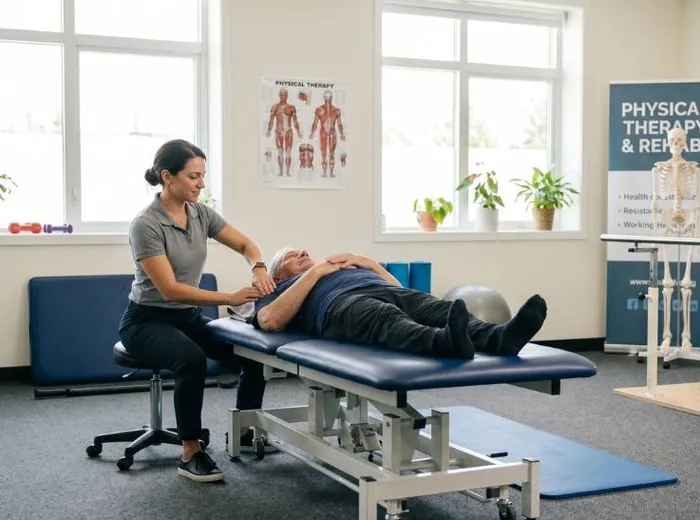
Manual Therapy
Hands-on treatment for the stiff joint or guarded muscle that keeps interrupting your training.

Fall Prevention
Screening and skilled therapy for the risks that put people on the floor in the first place.
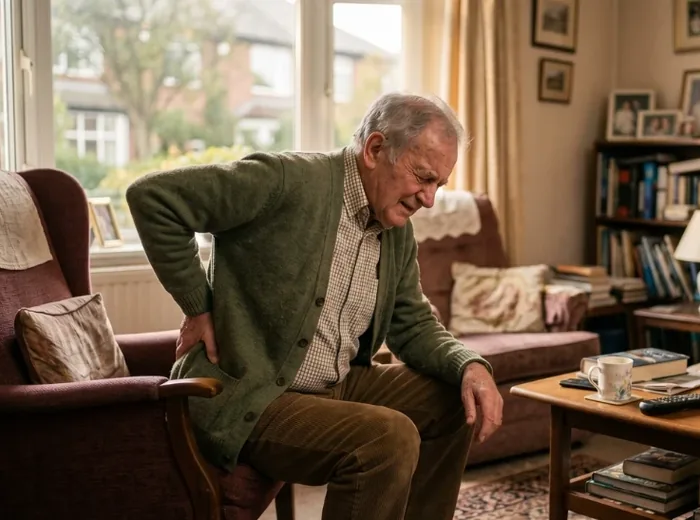
Core Weakness
Weak trunk support shows up as a sore back, a slow chair rise, and balance you cannot trust.