Core Weakness Treatment in Tennessee
You still walk, you may even exercise, and you still feel unsteady carrying laundry up the stairs. That is not laziness and it is not simply your age. The deep muscles that hold you steady have gone quiet, and quiet muscles can be woken back up.
What causes core weakness?
Your core is the group of muscles in your abdomen, back and pelvis that support nearly every movement you make. When they are weak, the effect is not subtle. Posture suffers, stability drops, and strain lands on the rest of your body instead. It shows up as difficulty standing, sitting or walking for long stretches, feeling unsteady carrying something or taking the stairs, persistent lower back discomfort, fatigue during ordinary daily activities, and reduced balance on uneven ground.
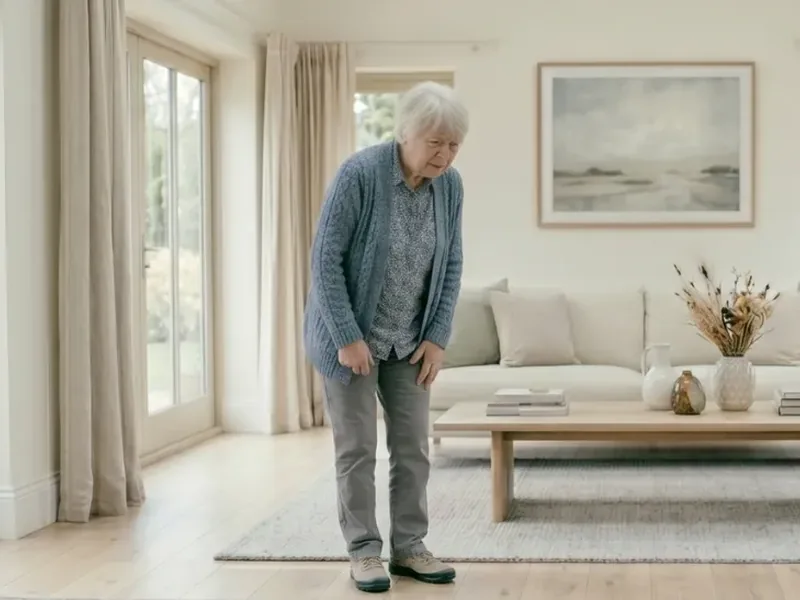
The stabilizing muscles of the trunk are use-it-or-lose-it muscles. Long hours in a chair let them switch off, and a stretch of reduced activity after an illness or a hard winter does the same thing faster than most people expect. Sitting often is one of the most common reasons people arrive here with ongoing back discomfort. The muscles are not gone. They have stopped being asked to do anything, and the back ends up absorbing what they used to handle. Strengthening them supports better alignment and reduces the discomfort.
This is the frustrating one. People walk daily, go to a class, and still feel weak and unsteady. The reason is that many programs never target the deeper stabilizing muscles that balance and support actually depend on. General activity is genuinely good for you, and it is not the same thing as training the trunk to hold you steady when you carry a laundry basket down a step. Functional strength that carries over into real movement is a specific skill, and it needs to be trained specifically.
Rarely does the whole core weaken evenly. Some muscles take over, others go quiet, and the imbalance changes how you hold yourself and how force travels through your body. One side does more of the work. One area gets tight while its opposite gets loose. The result is instability plus extra strain on joints and muscles that were never meant to compensate. Correcting those imbalances is a core part of the plan, and it usually matters more than raw strength.
Weak core muscles and poor posture feed each other. As the trunk loses support, you settle forward, the spine falls out of good alignment, and the muscles that were already struggling get an even worse angle to work from. Standing and sitting stop being restful and start being work, which is why fatigue during normal daily activities is such a common complaint. Postural correction reduces that strain and gives the stabilizing muscles a position they can actually function in.
Core weakness does not sit still. Left alone it tends to lead to worsening pain, reduced mobility and increased fall risk, because balance and safe movement both rely on trunk stability. Every month of doing a little less makes the next month harder. That is the real reason to address it early rather than wait for something to happen. Protecting long-term independence is far easier than rebuilding it after a fall has already changed what you are willing to do.
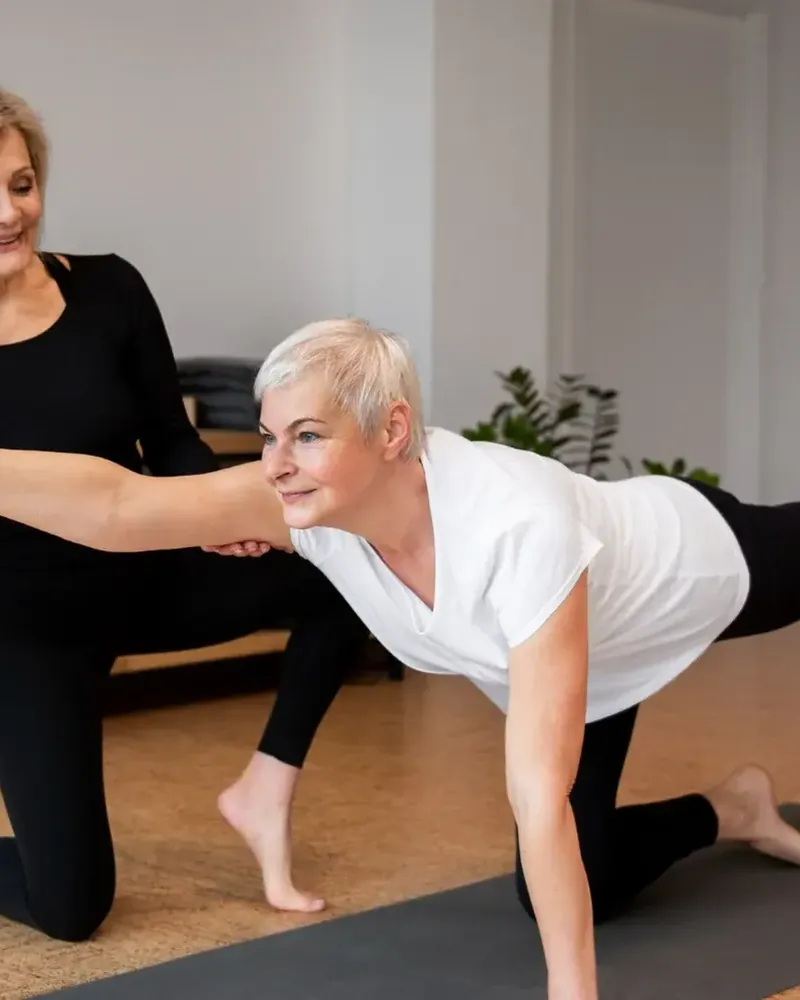
How physical therapy in Tennessee helps.
Your care begins with a one on one evaluation of your posture, movement patterns and strength. Plenty of people arrive already exercising and still feeling weak, and the evaluation is usually where that stops being a mystery. From there the plan focuses on four things: improving posture and spinal alignment, correcting muscle imbalances, enhancing stability and coordination, and reducing strain on your joints and muscles. Care here is one on one and built for seniors, because rebuilding core strength at 72 is a different job than it is at 30.
The work itself is core activation exercises to engage the stabilizing muscles, balance and coordination training to improve stability, postural correction to reduce strain and discomfort, and functional strengthening tied to real daily activities rather than exercise performance. This is not a quick fix. It is a structured progression that supports recovery and long-term maintenance, with simple guidance so you stay consistent between visits. Sessions run 30 to 60 minutes one on one, typically 2 to 3 visits a week for 4 to 6 weeks, and most people notice a change within a few weeks. Tennessee has direct access, so no referral is needed for up to 90 days, and we verify your insurance benefits before you start.
What to expect from your recovery.
One on one evaluation
We assess your posture, your movement patterns and your strength, watching how you sit, how you rise out of a chair, and where the stability drops out. You leave knowing which muscles have stopped doing their share, why your back has been picking up the difference, and what the plan does about both.
Core activation and postural correction
Early sessions wake up the stabilizing muscles that have gone quiet, paired with postural correction to improve spinal alignment and take strain off your joints. These exercises are small and specific by design. They are meant to be felt in exactly the right place, not to leave you sore the next morning.
Functional strength and stability
Then we build. Balance and coordination training plus functional strengthening tied to the real tasks that have gotten harder: stairs, carrying, standing at the sink. The measure is comfort in sitting, standing and walking, better balance, lower fall risk, and strength that keeps you independent.
I am stronger and much more balanced! The people there are kind and very supportive of my needs.
Pain rarely travels alone.

Arthritis
Stiff joints make people move less, and moving less is how trunk strength quietly disappears.
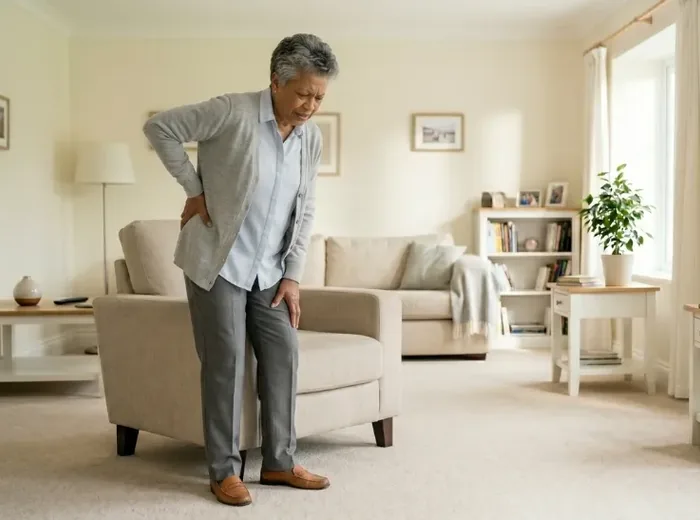
Hip & Knee Pain
Hips and knees absorb whatever the trunk fails to control, and stairs are where you notice.
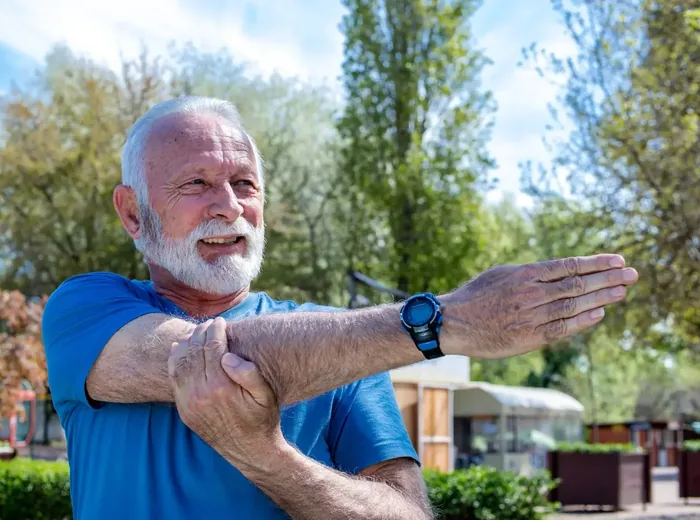
Shoulder Pain
Reaching overhead depends on a stable base underneath it. We start with the base.