Ultrasound Therapy in Tennessee
You were told it is wear and tear and sent home to wait it out. Waiting is not a plan. Ultrasound is one tool your therapist can use to settle an irritated area down far enough that the real work becomes possible.
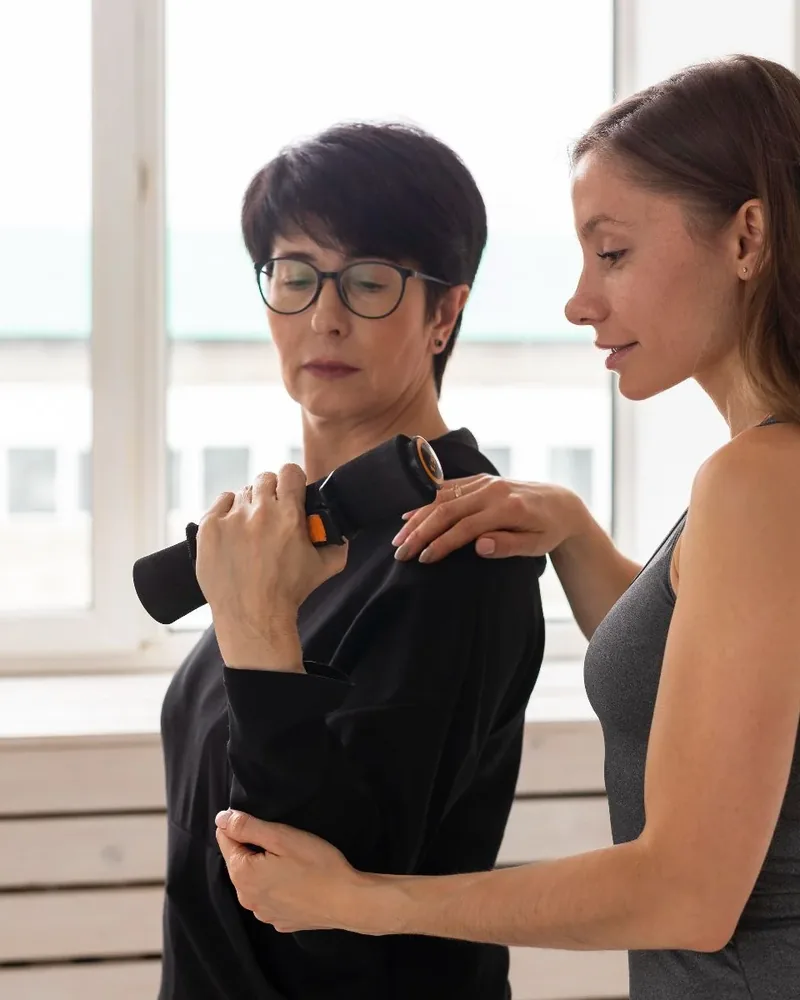
What is ultrasound therapy?
Ultrasound therapy uses high frequency sound waves to carry gentle energy below the skin and into soft tissue. This is not the ultrasound that takes pictures of anything. It is a small handheld device, a layer of conducting gel, and a therapist moving the head slowly over one area for a few minutes. The energy is there to support the repair work your body is already trying to do, by improving circulation to the area, easing inflammation, and encouraging tissue to remodel. It is non-invasive, and there is nothing to recover from afterward. Most people feel a mild warmth and nothing more than that. A therapist may reach for it when the problem is tendinitis or bursitis, a muscle strain or ligament injury, joint stiffness or osteoarthritis, scar tissue that has quietly restricted your movement, a surgical site still settling down, or an area of pain and inflammation that is simply too irritated to load yet.
Here is the part that usually gets left out of the brochure. Ultrasound is not a cure, and it is not a stand-alone treatment. A few minutes of sound waves has never made anybody stronger. What it can do is take the edge off an angry area so that the rest of the plan becomes possible, which is the Pain step of our four phase model: Pain, Prime, Perform, Prevent. It is used alongside manual therapy to restore mobility, targeted exercise to build strength, balance and functional training for safety, and plain education about what to do at home. Whether it belongs in your plan at all gets decided at your one on one evaluation, and if it is not helping, it comes out. Visits run 30 to 60 minutes, and ultrasound is only a small slice of that. Tennessee direct access lets you be evaluated for up to 90 days without a physician's prescription, and we verify your insurance benefits before you begin.
Who ultrasound therapy is for in Tennessee.
Most people who end up under the ultrasound head here are older adults with one stubborn, inflamed spot that is holding up everything else in their program. Calm that spot and the rest of the plan starts to move.
Tendinitis and bursitis
The shoulder objects to putting a plate on the top shelf, and it wakes you when you roll onto that side. An inflamed tendon will not tolerate strengthening while it is this irritated. Ultrasound is used to bring the area down enough that the exercise which fixes the shoulder can actually begin.
Stiff joints and old scar tissue
Osteoarthritis in a knee or a hand, or a surgical scar that has tethered the tissue around it and taken your range with it. Warming and softening the area first makes the stretching and joint work that follows more productive, and less of an argument with your own body.
Strains, sprains and healing surgical sites
A muscle strain or ligament sprain that has stalled, or a repair that is healing but still angry weeks later. Support for circulation and tissue repair can help that area move from protected to usable, which is the point where you get back to walking the block without planning the return trip.
What to expect in a session.
Ultrasound is a few minutes inside a longer appointment, never the appointment itself. Here is where those minutes sit.
Evaluation comes first
Care starts with a one on one evaluation, because ultrasound is only right for certain problems and certain stages. Your therapist examines the area, asks what makes it worse, and decides whether the modality earns a place in your plan at all. Plenty of people are told it does not, and get a different plan instead.
The treatment itself
Your therapist applies a specialized gel to the skin so the sound waves transmit, then moves a handheld device slowly and continuously over the area. You may notice a mild warmth. It should never be uncomfortable, and if it is, say so and the settings change. The whole thing takes only a few minutes.
Then the work that changes things
The rest of your visit is manual therapy, targeted exercise, balance and functional training, and education for home. That is the part that produces lasting change, and ultrasound exists to make it tolerable sooner. Frequency depends on your condition and gets adjusted as the area settles, not set in stone on day one.
Ultrasound is not appropriate for every person or every area. Before it is used, tell your therapist about any implanted device such as a pacemaker, a recent surgery or fracture, active cancer treatment, a pregnancy, or skin over the area that has lost sensation. That conversation decides whether it belongs in your plan, and it is a short one.
Excellent !!! Everyone is so friendly. I look forward to going every week. Treatment is really helping me to get back to normal.
Where to go next.
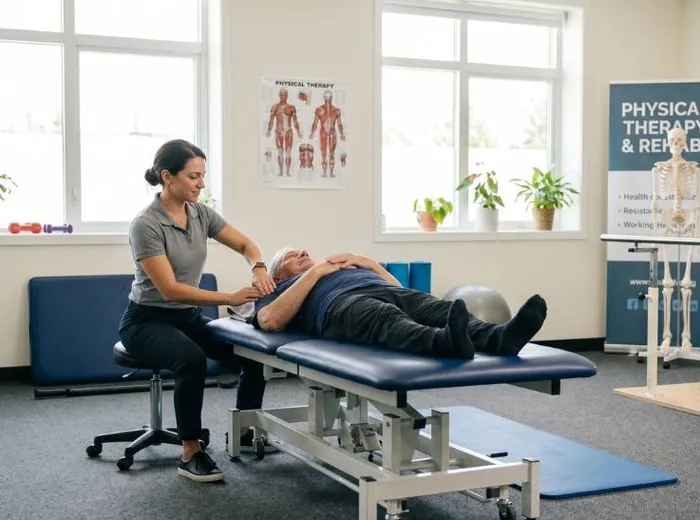
Manual Therapy
The hands-on work ultrasound is meant to sit beside, aimed at stiff joints and guarded muscle.

Physical Therapy
The complete plan of care every modality belongs inside, from evaluation through home program.
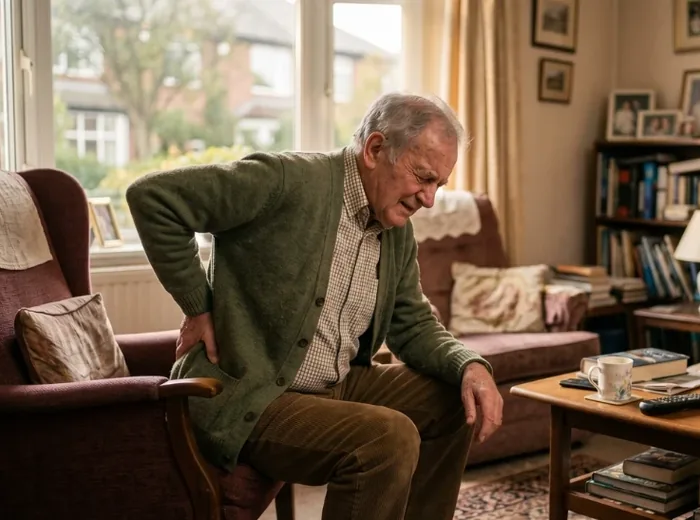
Chronic Pain
Pain that has outstayed the injury needs more than a modality. It needs a plan you can hold.