

Interview with Leslee Bibb and Ryan Myracle
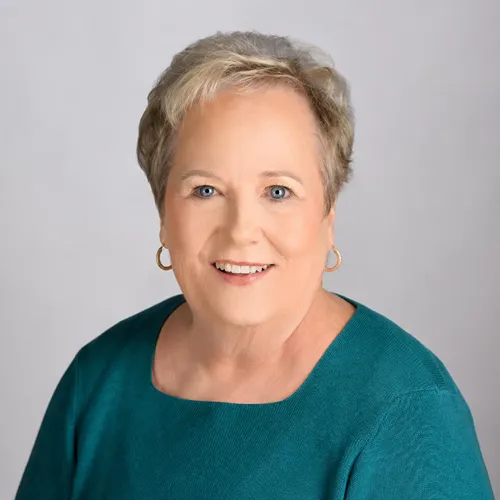
Spotlight Series Topic: Seniors Aging Safely at Home: Our Holistic Approach
Guest Name: Leslee Bibb and Ryan Myracle
Guest Credentials: Owner of Comfort Keepers
Discussion Details: Seniors Aging Safely at Home: Our Holistic Approach. Our mission is to help seniors stay at home, independent, healthy, happy, and active. We believe everyone deserves to have their last years be great years, filled with learning, joy, love, and new experiences. #SeniorCare #AgingInPlace #IndependentLiving #AgingSafely #ElderCare #QualityOfLife
Benefit of Watching: Seniors Aging Safely at Home: Our Holistic Approach
Address of guest’s business: 367-B North Pkwy #6, Jackson, Tennessee 38305
Well, hello, everyone. This is Dr. Mike Keough of Physical Therapies. Hey, today we’ve got a special guest.
Our special guests for today are Miss Leslee and Ryan from Comfort Keepers. We’ll be talking about helping seniors age safely in the home, and we’ll be back in a few seconds. Okay.
All right. We are back, coming to you live. I’m here at Martin, Tennessee right now.
And our special guest for today is Mr. Ryan. He’s the general manager of Comfort Keepers in Jackson, Tennessee, and of course we’ve got Miss Leslie Bibb. She’s the owner.
And we’re going to ask them who they are, what they do, and how they can help our seniors, you know, age safely in the home. So without further ado, let’s go ahead and bring in Leslie and Ryan. Miss Leslee Bibb, Mr. Ryan, how are you guys doing? Well, what we do and what our mission is to help seniors stay at home and be independent and healthy and happy and active. I mean, we want everybody wants the last years of their lives to be great, and lives lived, and that’s kind of our mission.
We talk about elevating the human spirit, which really means you don’t just maintain your body in your house so you can get up and do it the next day. Every day is a day of life and should be something of learning, of joy, of feeling love, of having socialization, new experiences, all while helping you or helping our seniors with their, you know, their needs at home, whether that’s housekeeping or some people need help with bathing or cooking, sometimes transportation. So we try to meld all of that into a holistic approach to providing care in the home.
Well, let me go back to the introduction first. Miss Leslee Bibb, again, could you please tell us what you do at Comfort Keepers? OK, well, that’s a good question because our name doesn’t tell you that. Our basic service is homemaker companion.
We help with housekeeping. We help with meals, grocery shopping, meal planning, and sometimes just being a companion. But a lot of our seniors are very lonely, and our caregivers become a friend.
And yeah, and we take that a step further. We also help with those activities of daily living. So if that person needs help with bathing, if they need help with toileting, dressing, transfers, getting around, the ambulation, we help with all of that.
And we help with that from a standpoint of, you know, if it’s just observation, if that person’s afraid of falling, or if it’s actual hands-on. So we can help with that transfer from that standpoint. And we also help with dementia care and whatever that may look like, whether it’s helping the person with those tasks and then helping them with memory or supporting them in different ways.
So there’s more to talk about what we do than what we don’t do. You know what? Again, thank you very much, Leslee and Ryan. For those people watching live, comment live, watching on the replay, comment replay.
And then there are people who are watching saying hello and everything like that. Hey, David. Well, anyway, so let’s go back to you.
You mentioned activities of daily living. So what kind of activities are these? So activities of daily living, that’s going to be helping with eating, so eating, dressing, bathing, toileting, transfer. So getting up out of a chair, getting into a bed or out of that bed or into a vehicle, out of the vehicle.
And then also ambulation. So how a person walks or moves from one space to another. So those are your activities of daily living there.
And then let’s backtrack a little bit. Ryan, where are you from and what do you do? Your position and everything at Comfort Keepers. Yes.
So my background, I am a master’s level social worker and licensed nursing home administrator, and I’ve worked in that arena for many years. But for the last year and a half, I’ve been here with Ms. Leslee at Comfort Keepers doing the non-medical home care side of things. And it really takes me back to my social work roots.
I love it. So here at Comfort Keepers, I’m the general manager, but also the client care manager because of my love for social work and getting out there and assessing and helping folks. So those are my main tasks here at Comfort Keepers.
And Ms. Leslie can tell you all about her. Well, he said he loves it here. We love having him here because he’s been a great addition to our staff and my role.
I’m the owner, actually. My background: I did have a bachelor’s degree in social work, but in 1981, you couldn’t get jobs in social work. So I got a degree in engineering, worked in corporate America for 20 years, and determined that I didn’t want to do that anymore.
So I quit, and the Lord brought this to me. I have a heart for seniors and all people, particularly with seniors. So I started Comfort Keepers in 2003.
Excuse me, that was 23 years ago. Yeah, 23, do the math. Wow.
Well, again, thank you very much for those people who are watching and everything like that. So 2003, I feel like it was just yesterday, but come to think of it, you said 23 years ago, right? I mean, I feel like it was just yesterday, you know, the year 2000, you remember Y2K and everything. So time flies so fast.
So what prompted you to start this business, Miss Leslee? Is Comfort Keepers a franchise, or did you start from the ground up and everything? Yeah, it is a franchise business. It was started by a home health nurse in Dayton, Ohio, who realized when she was visiting the seniors that they had a lot more need than just what the nursing side of things could do. They needed help with, you know, getting laundry out of the basement.
We don’t have those here, but, you know, one lady told her, said, I haven’t had bread in two weeks. Could you run to the store? Home health nurses are not allowed to do that. So that’s where Comfort Keepers came from.
And I was in the doctor’s office one day with a friend, and I just noticed the struggle that a lot of seniors are having to, you know, get out of the car, get in, go park the car, you know, help their wife, and to be listened to. You know, they would go up and talk to the receptionist, and they’d get an answer and then a closed window that said, We’ll be with you in a minute. And I knew that I wanted to do something to help seniors, but I didn’t know what that was.
And then after I left my job in corporate America, I found Comfort Keepers. I said, well, there we go. Yeah, so it’s true that, you know, sometimes we just have to find that need in our community and serve that need well, and then, you know, everything will follow through.
And that’s what we do, too. In Jerry Hab, you know, I saw the need that, hey, this client, you know, because in home health, they’re very limited in the visits. I don’t know if you know that, you know, we get a limited number of visits with home health.
You know, sometimes we go there once a week, and after a month we discharge them. And I said, well, how can my patients improve if we’re discharging them, you know, after a month or so? Sometimes, you know, three visits, four visits. What can I get out of this? You know, so when I got fired from the hospital, from working at the home health, like whatever, I’m just going to do it on my own.
And then lo and behold, in Medicare Part B, you know, outpatient therapy can be provided in the home, too. And then there’s what you call maintenance therapy. I don’t know if you know that for those people who are watching.
Maintenance therapy is you provide physical therapy for those people who have Alzheimer’s, Parkinson’s, stroke, you know, elderly seniors that you don’t have to discharge them, provided that it is provided by, you know, a skilled service, you know, like physical therapy, and that you’re going to keep them to prevent them from getting worse. And that’s what we do in Gerihab, Ms. Leslee and Ryan. You know, we provide, you know, the maintenance therapy to prevent clients.
Even up until now, I still have home health companies who would argue with me on that. Even hospice, before, in my head, you know, our training is that when a patient is in hospice or a client is in hospice, that you cannot provide therapy. That is wrong.
You know, a physical therapy Part B provider can still provide therapy services for a person who is receiving hospice care. It’s just that we were so trained that, oh, they’re not going to get better. Let’s just charge them, or they’re going to pass away, you know, in X amount of days or months.
We’re going to, you know, we can’t know. It’s not really about restoration. It’s about what you said: improving the quality of life.
And that’s where Comfort Keeper comes in. They’re helping you improve your quality of life at home. So, Mr. Ryan, does Comfort Keeper accept insurance? How does the payment scheme work there? So there are a few insurances that we do work with.
We will accept the long-term care insurance policies that pay for assisted living or skilled nursing facility or long-term care. But we will accept those, and they will pay for that in lieu of being in assisted living. So our services in the home.
Not a lot of people have those anymore. But if that’s something the person has, they definitely want to try to utilize that. And then we do have VA contracts.
So if the person is contracted for a home health care aide for homemaker services through the VA, then we can be the provider for that in this area. And then we’re also a provider for Medicare guide, which is a new program for Medicare, where people who have traditional Medicare and a diagnosis of dementia, they can receive some free respite hours each year. And so we’re a provider for that respite care.
So those are the primary insurances we take here at Comfort Keepers. Wow. So that’s good that you got approved for the guide.
I’ve been applying for that. I just can’t get in. So that’s good.
Maybe you got a big partnership, but no, because you got a big, you know, franchise company for small clinics like us. It’s so hard to get it approved. Well, anyway, so you got, you know, long-term care insurance, VA’s about the cash pay.
Do you accept cash pay? Absolutely. Yes. Many want to pay that way.
But we do. I mean, we don’t exclude anybody for that reason. Obviously.
So for younger people like us, Miss Leslie, do you recommend us, you know, I’m saying younger, right? As I said, everybody’s young, right? Do we have to start getting our long-term care insurance as early as now? What do you recommend? As you said, there’s not a lot of long-term care policies now. They have what do they call a living in life insurance where you pay for the life insurance. But then if you need that for home care or whatever prior to your death, you have a benefit there.
If you don’t use it, it’s like any other life insurance. But I do think that’s a good policy. But the key thing, and I would want to tell everybody, particularly those people like me who are still young, is make plans, figure out how you’re going to do this, because Medicare, Medicare, they say, is not going to last a whole lot longer, and it covers your medical, but it doesn’t pay for in-home care.
It doesn’t pay for transportation to the doctors. It doesn’t pay for, you know, much other than the medical. And so, you know, you’ve got to make plans and social security.
You know, they say in 2030 that it’s going to be flush and everything that can go out is something that’s coming in. So we need to make financial plans for that and make our wishes known to our children or our families so that when the time comes that we need help, they know how we would like to have it administered to us. That’s true.
That’s true. You know, planning is very important. We have patients who don’t even have a POA in place.
You know, there are a lot of things that you need to consider, especially when you think about, you know, getting home care services like Comfort Keepers or worse, nursing home, and to the point that even their house are being taken from them. So it’s very important you plan. You know, planning is the key.
You know, if you fail to plan, you plan to fail, something like that. Again, where can they find you? Do you have a website that you can share, Ryan, and then a telephone number and email? Yes, so our phone number here at the office, 731-664-7664. My email is rnyracle, so r-n-y-r-a-c-l-e at c-k-j-t-n dot com.
All right. We have a website, which is www.comfortkeepers.com, and you can see all the different locations that Comfort Keepers have offices because you make it friends that, you know, have parents out of town or, you know, you want to find Comfort Keepers wherever; that’s the way to do it. And you can also find our office and our website.
Speaking of location, where can they find you? Are you in the service area that you have right now? We have an office off the top of North Parkway, kind of almost at the corner of the bypass near Red Hook Restaurant. Of course, clients don’t come to us much. We go to them, but we do have a few that come by to visit or come in, you know, just to talk to us and find out what we do.
I’m sorry, Dr. Mike. I was going to say that our service area, you know, is Jackson, but it broadens much further. We go all the way down to Hardin County, McNary County. We’re in Haywood County, Decatur, Henderson, Chester.
Who else am I missing? Did you name Gibson? Gibson County, yes, Carroll County. So we have a really big footprint. And, you know, if we get a call from somebody not in that area, we will look to see what we could do to help them, you know, even temporarily until we can get staff in that area.
So we really want to help anybody that’s needing help or help them find the help from somebody else if we can’t help them. So truthful. Thank you very much for those people who are watching.
This is in Tennessee, so their main office is in Jackson, Tennessee. And of course, they’re all nationally; they have national locations for Comfort Keepers. Any last parting wisdom, Ms. Leslie and Mr. Ryan, for our caregivers out there who need help with their loved ones? The biggest thing I would say is don’t be afraid to ask for help.
Don’t be afraid to reach out to us. Our care consultations are free of charge. We’ll come to your home and do that.
We’ll help you figure out a schedule that works for the needs that you have. And it’s better to do that early than when you’re in crisis, because it makes it so much harder when you’re in crisis for you and for us as well. And so, you know, start early.
Don’t be afraid to ask those questions. Let us know what you need, because if we don’t know the answer here, we’ll be glad to find somebody that does know that and can help you at your point of need. So that would be my advice is to not be afraid to reach out and don’t wait.
And I would add on to that. I lost my train of thought there for just a second, but we were talking about the, you know, reaching out, you know, we don’t tie you into anything. We can come and do one visit every other week.
We can, you know, up to 24-7 care. And we love to talk to people and just help them, even if they probably won’t use our services. I mean, some of my happiest moments are talking to caregivers who are feeling the brunt of their work caring for someone and just to hear them say, I didn’t know that.
That makes sense. Or I’m glad you understand. So I would say even if you think you don’t need help, reach out and just talk to other people.
I know about caregiving because no one can do it by themselves. Not forever. That’s so true.
So it’s true again. Thank you very much, Miss Leslee and Ryan. Appreciate you.
And again, for those people watching live, comment live; watching on a replay, comment replay. What’s up, Ralph? Appreciate you. But before I let you go, ladies and gentlemen, always remember the word FAST: FAST letter F. Find people that will bring out the best in you because you are the average of the five people you hang out with.
Do they hang out with Miss Leslee and Ryan? I feel like I want to refer to some of our patients. Right. We got plenty of patients that need respite care.
And next letter is letter A. Take action. All this stuff that we’re doing is not going to do me any good. It’s not going to do Ryan and Leslie good.
If you don’t take action, take action. Go to their website, comfortkeepers.com, call them, talk to them. Hey, what are the resources that I can have and get with my current situation? And they’ll find a solution for it.
Right. That’s a good company there. Next letter is letter S. Share and subscribe.
The more shares, the better. Share their website, share their Facebook page or whatever. So just keep sharing that.
Right. And last but not least is letter T is teach it. Why? Because when you hear it, you forget.
When you see it, you remember. But when you’re actually teaching it, letter T is you’re actually understanding it more. And the more you teach it, the more you understand.
Again, thank you very much. Be awesome. Be great.
Be excellent. And we’ll see you in the next episode of our Jerry Hab Show. Bye-bye.
With an integrated EMR that will enhance workflow efficiency and patient care.